Hybrid work has moved from an experiment to the default operating model for many organizations across Europe. Yet while flexibility is now widely accepted, productivity remains a recurring concern especially for HR teams tasked with balancing performance, fairness, and employee experience.
The challenge is no longer about whether people are working. It is about whether hybrid setups actually help teams collaborate, focus, and deliver results. In many organizations, productivity issues are not caused by a lack of effort, but by a lack of structure.
“76% of employees choose employers based on hybrid flexibility.” Michael Page.
That means hybrid work is no longer optional — it’s a strategic advantage for attracting talent and increasing satisfaction.
This article outlines practical, realistic ways HR leaders can improve productivity in hybrid environments without reverting to rigid office mandates or invasive monitoring and gives examples of powerful tools to increase hybrid work productivity.
Rethinking Productivity in Hybrid Work
In hybrid environments, productivity cannot be measured by hours online or desk occupancy. Knowledge work depends on a combination of focus time, collaboration quality, and predictability.
For HR, this means shifting the definition of productivity toward outcomes:
Are teams able to work together effectively?
Do employees have uninterrupted time for deep work?
Are office days purposeful rather than random?
A modern hybrid strategy recognizes that productivity looks different across roles and teams. HR’s role is not to standardize behavior, but to provide clear frameworks that support consistent, fair ways of working.
The Most Common Hybrid Productivity Killers
Before looking at solutions, it is important to acknowledge what typically goes wrong. Productivity challenges in hybrid work rarely stem from a lack of effort. They are usually the result of missing structure, coordination, and visibility. Here are five most The most common issues include:
Teamwork suffers without coordination
Teams come into the office without alignment and miss the colleagues they actually need to work with. This breaks collaboration, leads to frustration, and gradually erodes trust in hybrid policies. When office presence is random rather than intentional, team work suffers instead of improving.
“86% say office days fail because of poor collaboration” Fierce.
Meeting overload
Hybrid work often increases the number of meetings instead of reducing them. In the absence of clear guidelines, teams compensate for uncertainty with more calls, leaving little time for focused work. Over time, productivity discussions shift away from outcomes and toward proxy metrics such as meeting counts or office days, making it harder to manage real goals and measure meaningful progress.
Lack of transparency at the organizational level
HR and leadership lack reliable insight into attendance patterns, collaboration dynamics, space usage, and overall hybrid effectiveness. Decisions are made based on assumptions rather than data. At the same time, team leaders lose visibility into how their employees are actually doing, both professionally and personally, because informal interactions and social moments decrease. This creates blind spots around wellbeing, engagement, and early signs of burnout.
Inconsistent rules across teams
When each team invents its own hybrid rules, perceptions of unfairness quickly arise, especially in mid-sized organizations where teams work closely together. Employees begin comparing arrangements, managers struggle to explain differences, and HR is left mediating conflicts instead of setting direction.
Deteriorating corporate culture
Without deliberate effort, hybrid setups can weaken social bonds and trust. Informal connections fade, loyalty toward the employer declines, and employees feel less connected to the organization as a whole. Over time, this cultural erosion directly impacts motivation, engagement, and long-term productivity.
These are not people problems. They are structural problems.
Tip 1: Anchor Hybrid Productivity in Clear Principles
One of the biggest productivity killers in hybrid work is the so-called ghost office: employees make the effort to come in, only to spend the entire day on video calls because their team is elsewhere. In these situations, the problem is not attendance—it is a lack of purpose. HR’s role is not to enforce office presence, but to help employees understand why coming in matters.
Productive hybrid work starts with a small set of shared principles. These principles should be simple enough to apply across departments while still allowing teams the flexibility to adapt them to their specific needs. In practice, effective hybrid principles often include:
Purpose-driven office presence: People come in to collaborate, not to “be seen.”
Flexibility with guardrails: Teams have autonomy, but within a clear framework.
Team alignment over individual preference: Coordination matters more than personal schedules.
Rather than dictating exact office days, HR can provide a common language and shared expectations that managers and teams can apply consistently. A good starting point is to identify which activities genuinely benefit from being done in person. These typically include onboarding new hires, brainstorming sessions, complex problem-solving, project kick-offs, and intentional team bonding. Once these high-value interactions are clear, the office strategy can be built around them.
When employees know that office days are designed for meaningful collaboration—rather than tasks they could complete more efficiently at home—attendance becomes purposeful instead of performative. However, this only works if teams have visibility into who plans to be in the office and when. Without that transparency, even well-intentioned hybrid policies break down.
Once hybrid work moves beyond a small, tightly knit team, avoiding the “ghost office” requires proper tooling. Employees need visibility into who will be onsite and why, so office days can be planned around real collaboration. Mid-sized companies often choose platforms which offer team collaboration features such as shared team office days, hybrid policies, colleague visibility, and coordinated planning to make it clear when coming in creates value. Platforms such as Yoffix, Seatti or Officely offer collaboration-oriented features that help teams align presence. The key feature is enabling teams to plan office time together so in-person work supports collaboration rather than turning into a day of isolated video calls.
Tip 2: Help Teams Coordinate When They Work Onsite
Company-wide mandates for fixed office days often backfire. Different teams have different collaboration rhythms: marketing may benefit from overlapping creative sessions midweek, while engineering might prefer focused onsite work later in the week and remote planning at the start. A one-size-fits-all schedule ignores these realities and frequently leads to underused offices or misaligned teams.
A more effective approach is to let teams define their own anchor days—consistent days when the whole team commits to being onsite together. This preserves flexibility while ensuring that in-person time is spent with the colleagues people actually need to work with. When anchor days are set intentionally, productivity gains follow naturally:
Fewer unnecessary meetings
Faster decision-making
More meaningful in-person collaboration
HR’s role is not to decide which days teams choose, but to provide the framework and visibility that make team-level coordination possible.
HR can support this by:
Encouraging teams to define shared onsite days
Making office presence visible at team level
Providing guidance on how often in-person collaboration is actually needed
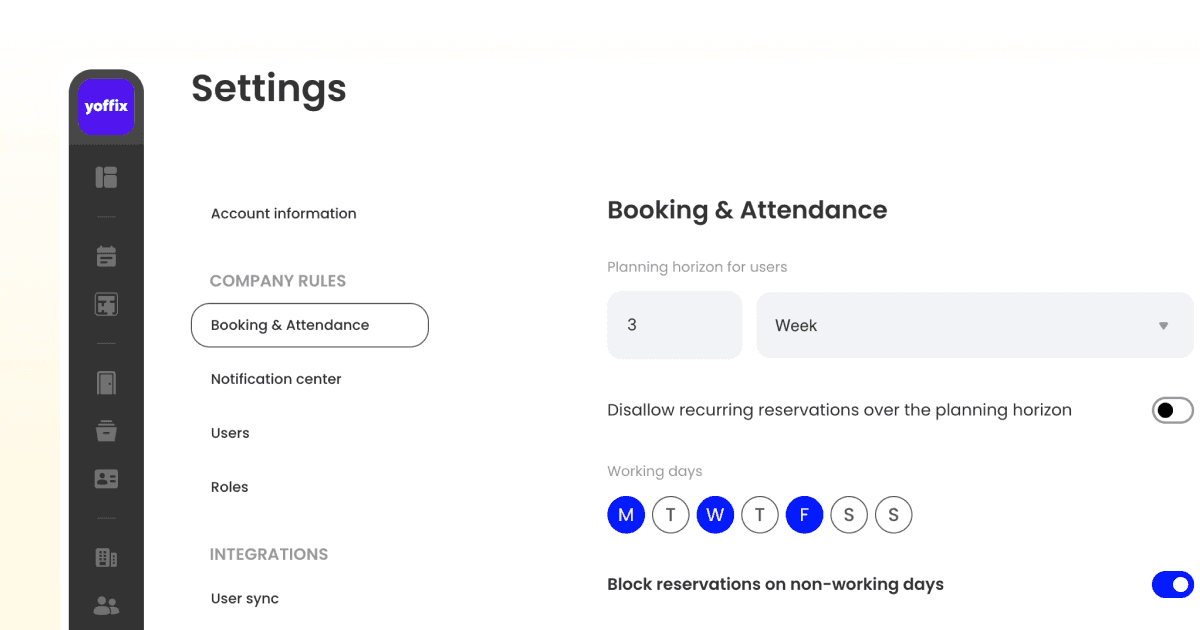
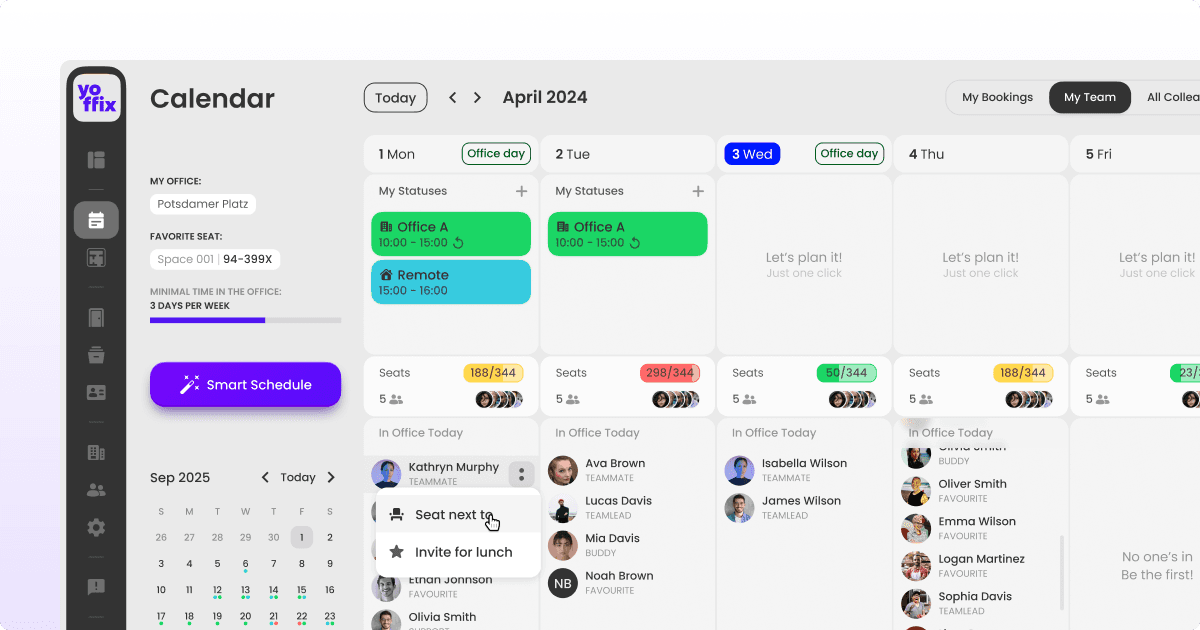
HR’s role is not to decide which days teams choose, but to provide the structure that makes team-level coordination possible. That means defining clear hybrid policies and attendance rules, giving teams a shared way to set and communicate their office days, and making presence transparent so employees can see when colleagues plan to be onsite.
Source: Yoffix
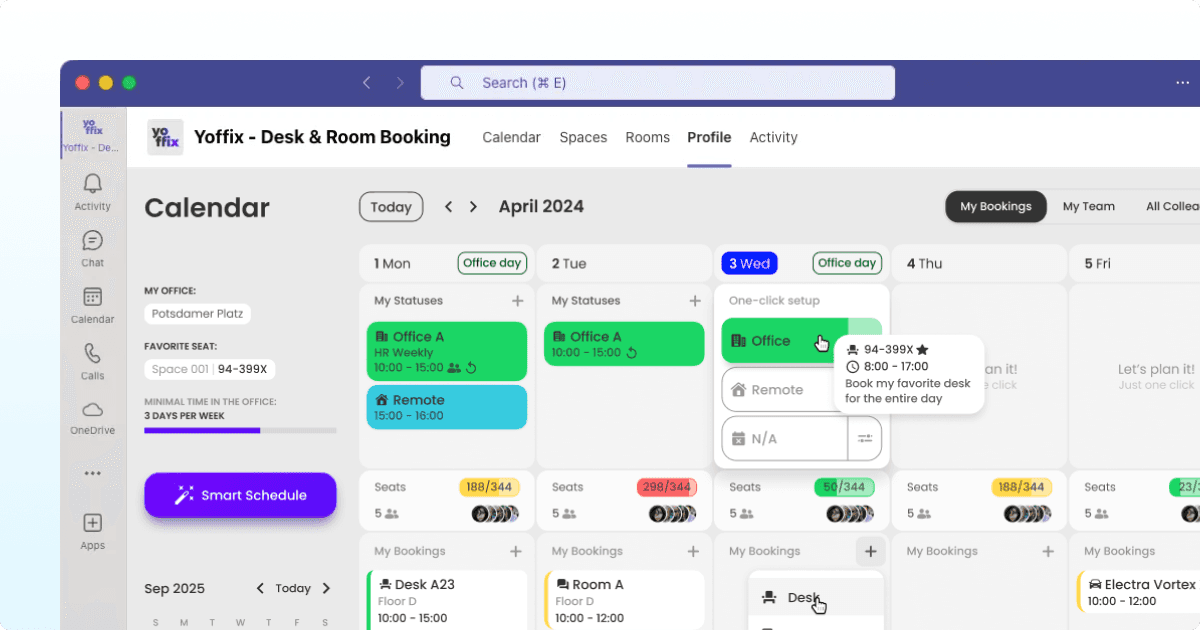
When people can view upcoming office days in a calendar, invite teammates to join them, or plan informal moments like team lunches around shared presence, office time becomes intentional rather than accidental. With the right framework in place, teams can self-organize around collaboration while HR ensures consistency, fairness, and clarity across the organization.
Tip 3: Reduce Cognitive Load Through Predictable Workflows
Traditional productivity advice focuses on time management, but hybrid workers face a different challenge: cognitive load. Constantly switching between home and office, navigating multiple tools, and dealing with unclear expectations creates a level of mental work that quietly drains productivity. Employees spend their energy figuring out how work happens instead of focusing on the work itself.
HR can reduce this friction by creating clarity and predictability. Standardized communication norms, clear guidance on which tools to use for which purposes, expected response times, and protected focus periods, help employees make fewer decisions throughout the day. When it is obvious where to ask a quick question, how meetings are scheduled, and when deep work time is respected, collaboration becomes lighter and less disruptive.
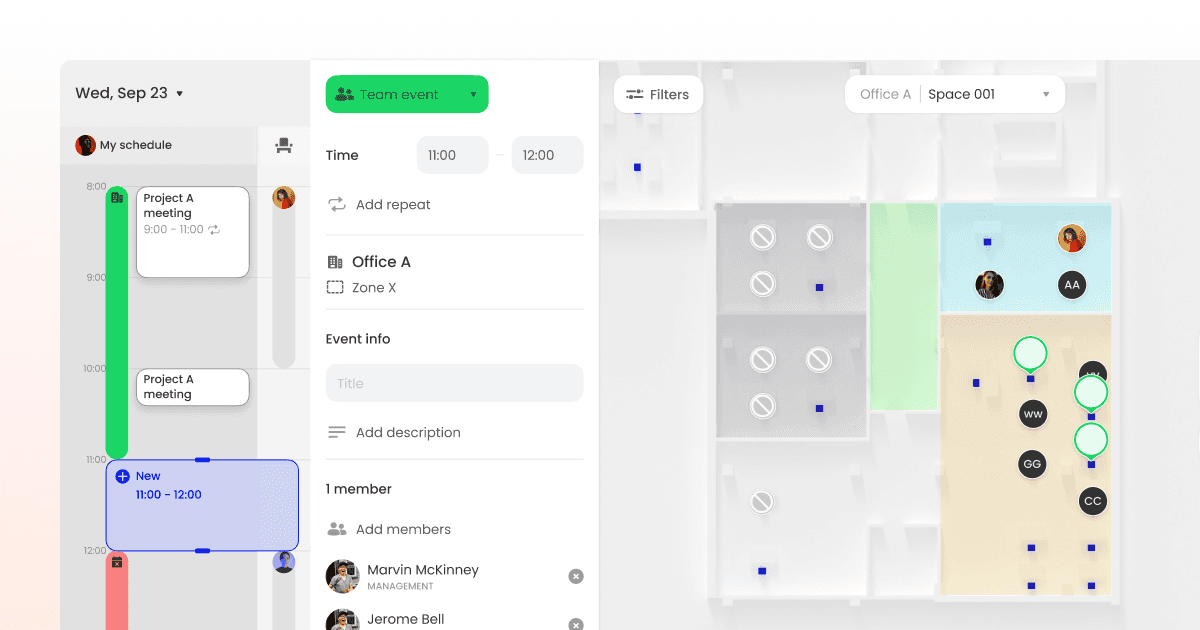
The same principle applies to the physical workplace. Productivity suffers when employees repeatedly need to check multiple tools to understand who will be onsite, rebook rooms at the last minute, or guess whether coming to the office will actually be worthwhile. Predictable workflows, clear booking and check-in rules, transparent visibility into desk and room availability, and simple ways to see planned presence, remove this uncertainty.
Many organizations support this kind of predictability with hybrid coordination platforms that combine presence visibility, booking rules, and team planning in one place. In practice, hybrid work is most productive when these processes are embedded into the digital environments employees already use, e.g. Microsoft 365, rather than adding yet another standalone system. This is especially important for mid-sized organizations in the EU, where IT complexity, security, and adoption barriers are often higher.
Source: Yoffix
Tip 4: Measure What Actually Matters (Without Surveillance)
Many HR teams are understandably cautious about measuring productivity in hybrid environments. Individual monitoring erodes trust and rarely produces insights that actually improve performance. A more effective approach is to focus on aggregated, organizational signals rather than people:
Attendance patterns over time
Space utilization trends
Correlation between team presence and collaboration outcomes.
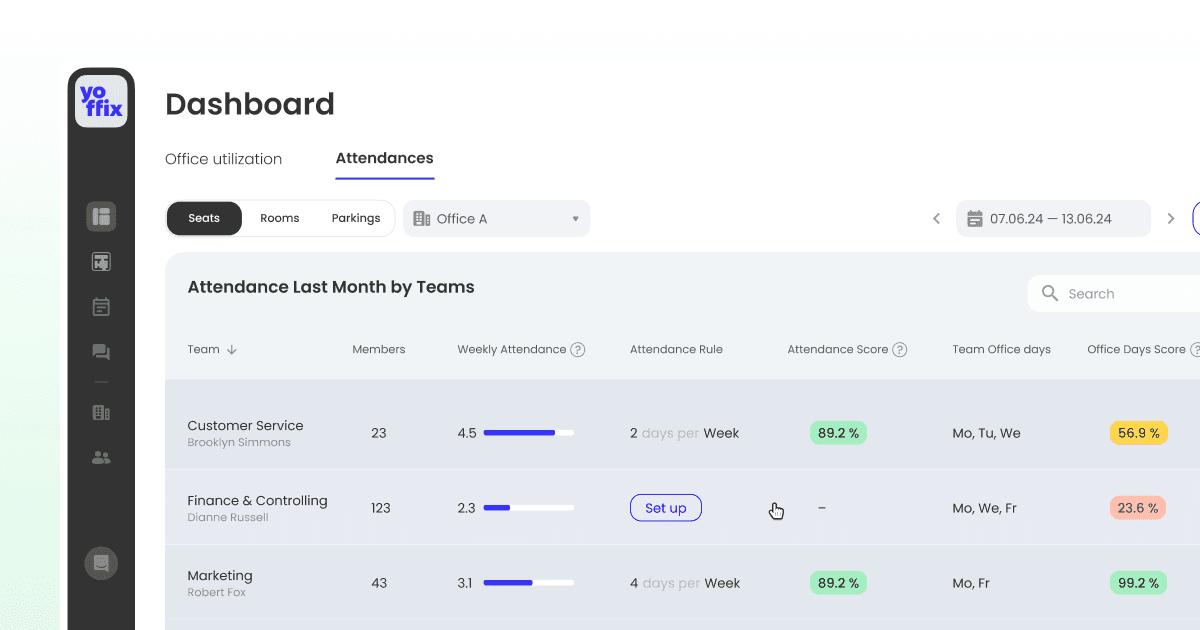
These insights help HR move from assumptions to evidence. Policies can be adjusted based on real behavior rather than anecdotal feedback, managers can be supported with data instead of opinions, and decisions can be communicated transparently to leadership and works councils. Hybrid workplace platforms such as Yoffix are increasingly designed with this exact purpose in mind: providing visibility into attendance, office utilization, and hybrid policy compliance at an aggregated level, without tracking individual performance. This distinction is particularly important in EU markets, where trust, data protection, and co-determination play a central role in HR decision-making.
Beyond policy optimization, transparency also helps address one of hybrid work’s most persistent productivity risks: proximity bias. Managers, often unconsciously, favor employees they see in person, assuming higher commitment or output. By making attendance patterns and utilization data visible at leadership level, HR can help challenge these assumptions. When it becomes clear that high performance does not correlate with frequent office presence, the focus naturally shifts back to outcomes, impact, and results.
In hybrid organizations, transparency is not about control—it is the foundation for fairness and sustained productivity.
Source: Yoffix
Tip 5: Make the Office Worth the Commute
Hybrid productivity is not just about flexibility; it is about motivation and meaning. Employees are more productive onsite when the office clearly enables collaboration, offers the right spaces at the right time, and removes friction instead of creating it. When office days feel unstructured or inconvenient, even the most flexible hybrid policies lose their impact.
HR can influence this by working closely with workplace, IT, and facilities teams to ensure:
Booking systems actually reflect how spaces are used
Office days are aligned with collaboration needs
Employees understand the purpose of being onsite
When the purpose of being onsite is clear, attendance becomes intentional rather than obligatory.
This is especially critical for new hires. In hybrid environments, onboarding productivity often suffers because new employees do not yet know who to approach, when it is acceptable to interrupt someone, or how informal relationships form. Without structure, ramp-up times increase and confidence drops. HR can counter this by designing onboarding that includes purposeful in-office moments: shadowing sessions, team lunches, face-to-face training on complex topics, and onboarding buddies who commit to being onsite on specific days during the first weeks. Giving new employees clear visibility into who will be in the office and when, helps them plan their presence, build relationships faster, and become productive members of the team sooner.
When the office consistently supports collaboration, learning, and connection, it becomes a productivity asset rather than a compromise.
Bringing It All Together: HR as the Architect of Hybrid Productivity
Hybrid productivity does not happen by accident—it is the result of deliberate design. For HR leaders, this means shifting the focus away from attendance debates and toward creating the conditions in which people can work effectively together:
Clear principles instead of rigid rules
Coordination instead of control
Insight instead of assumptions.
While smaller organizations may manage this through informal agreements, mid-sized companies need shared structures to maintain fairness, clarity, and momentum at scale. When flexibility is supported by predictable workflows, purposeful office experiences, and transparent insight, hybrid work becomes sustainable—for employees, managers, and the organization alike.
10 Best Tools to Support Hybrid Work Productivity
Hybrid productivity is not solved by a single system. Most mid-sized organizations rely on a combination of tools that support coordination, culture, performance, and wellbeing. Below is a curated selection of tools that address different dimensions of hybrid work effectiveness.
1. Team coordination and office day scheduling
Yoffix
Source: Yoffix
All-in-one software to manage hybrid offices which supports coordinated office days, hybrid policies, desk and room booking as well as visitor management and workplace analytics. Helps teams avoid unplanned office presence and enables HR to create structure without micromanagement, and is perfectly integrated with 20+ HR Software but also MSTeams, Google and Slack.
2. Culture and employee feedback
Culture Amp
Source: Culture Amp
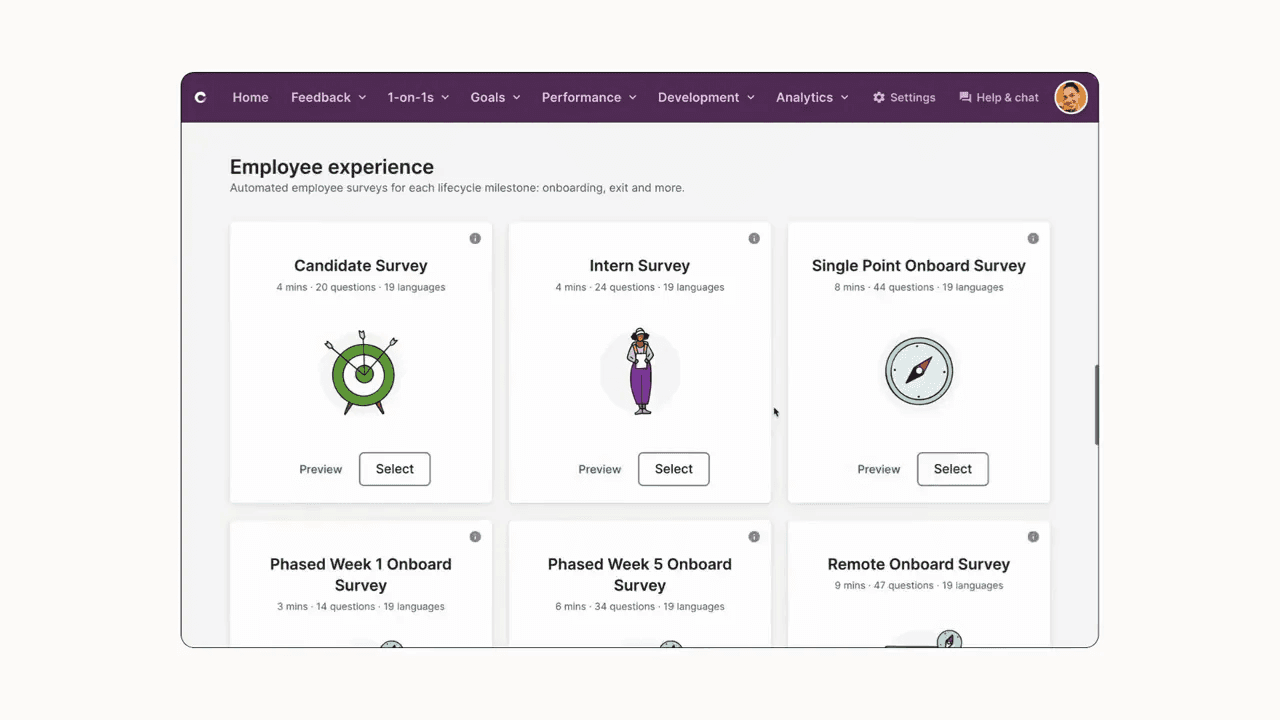
Helps organizations measure engagement, collect continuous feedback, and track cultural health across distributed and hybrid teams.
3. Team engagement and individual performance
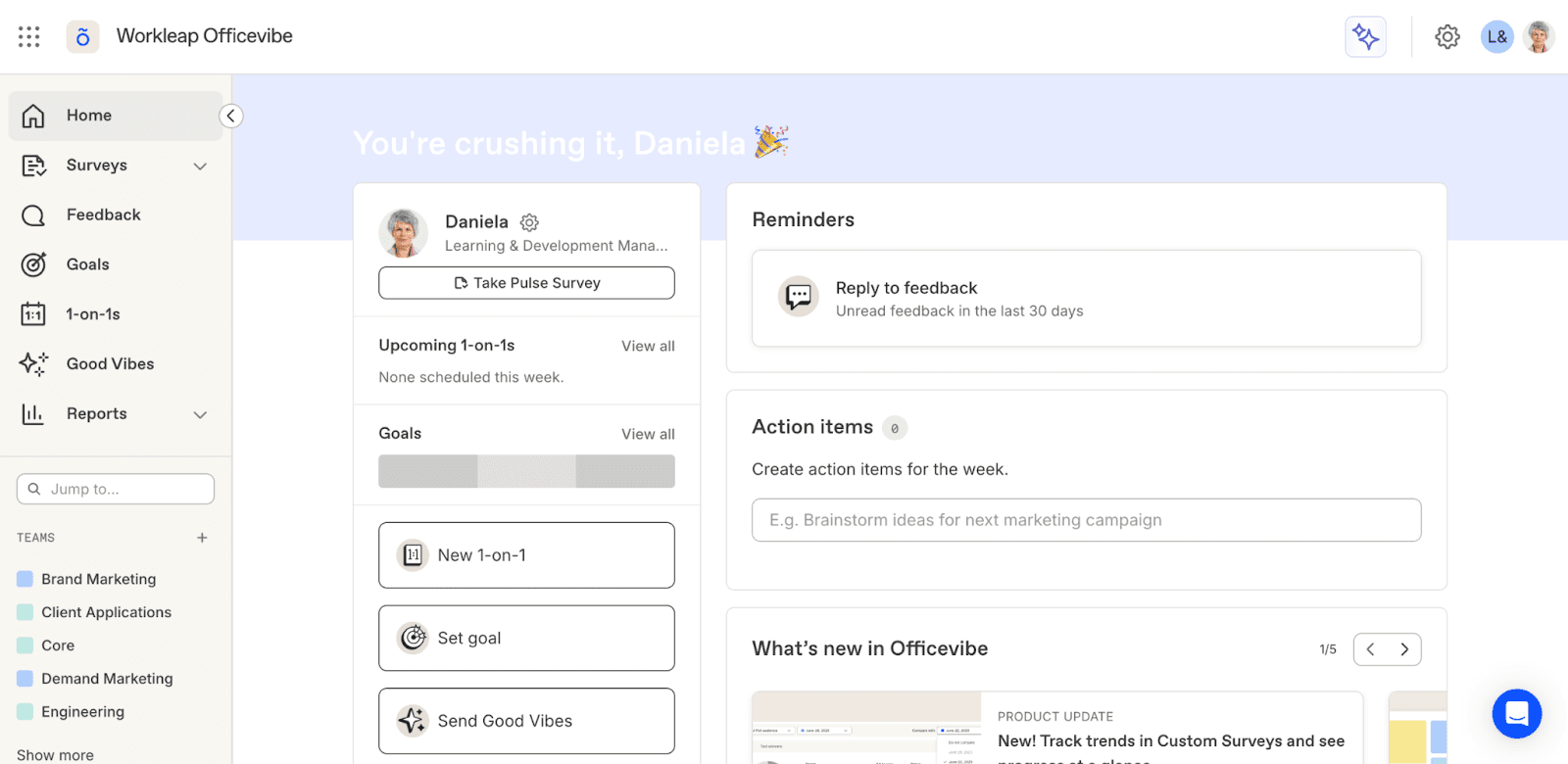
Workleap
Source: Workleap
Combines performance enablement, employee feedback, and team engagement tools to help managers support outcomes rather than presence.
4. Mental health and psychological wellbeing
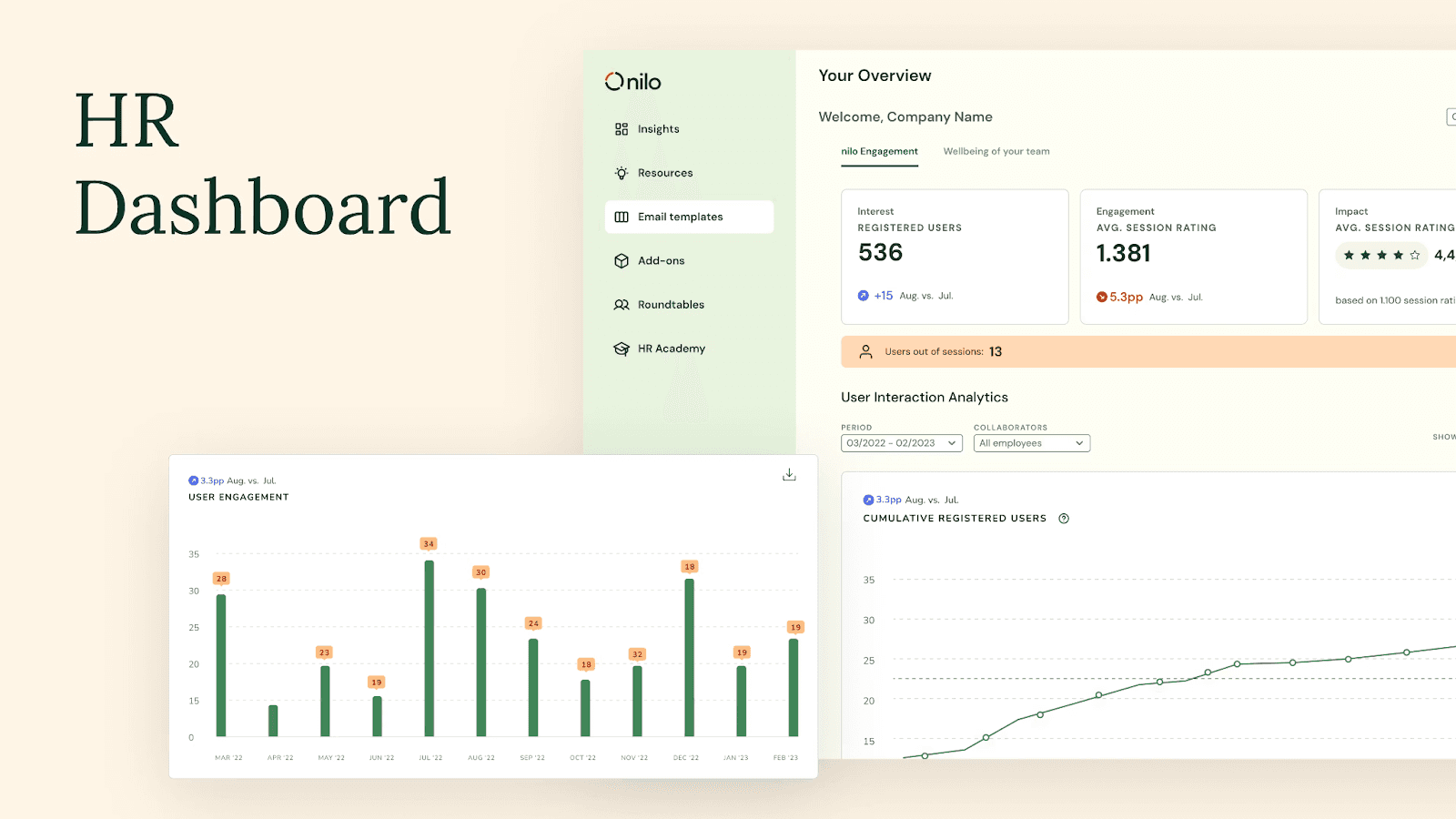
Nilo Health
Source: Nilo Health on GetApp
Provides access to coaching, therapy, and preventive mental health support, addressing one of the most overlooked productivity factors in hybrid work.
5. Home office as a service
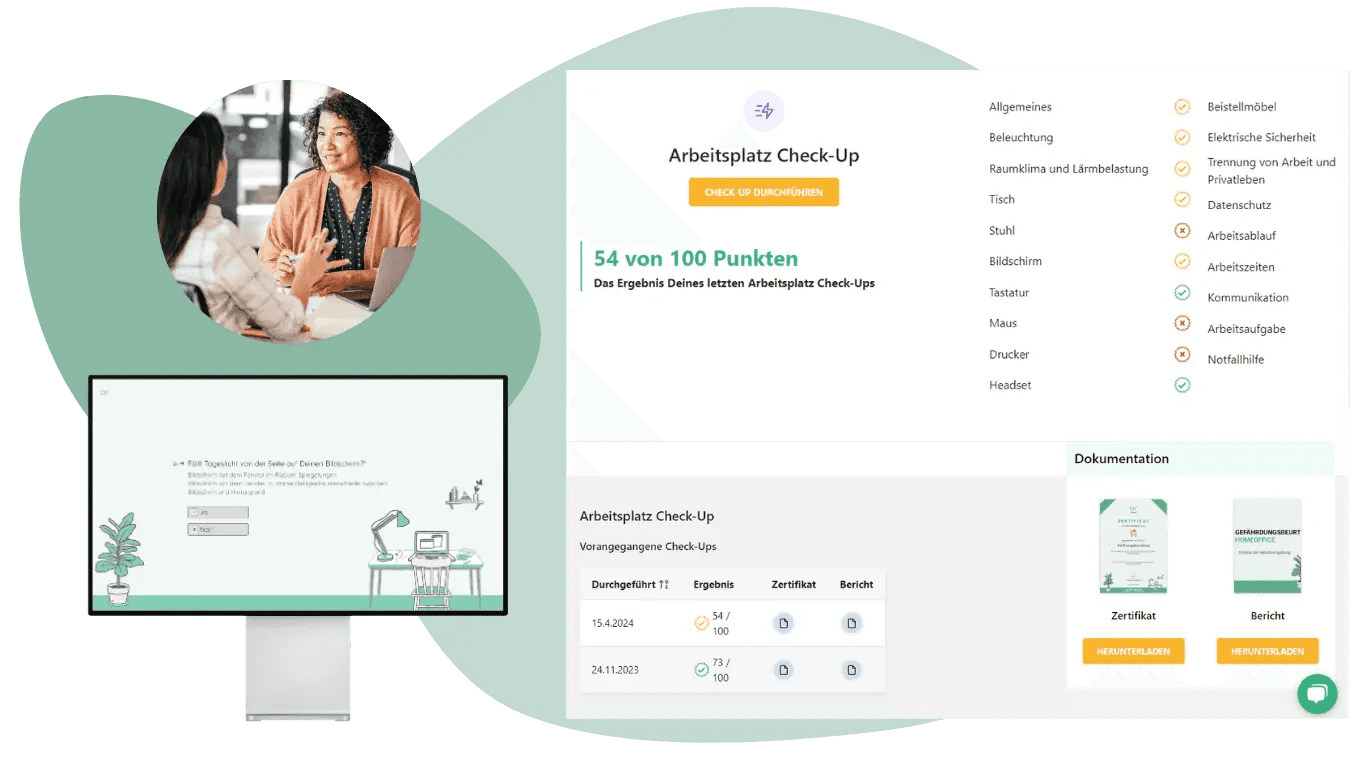
Onyo
Source: Onyo
Enables companies to equip employees with ergonomic home office setups in a structured, scalable way, reducing physical strain and productivity loss.
6. Employee benefits and tax-free allowances
Valuenet
App UI -
Source: Valuenet
Offers tax-optimized benefit solutions for German companies, supporting employee satisfaction and retention in hybrid setups.
7. Project and task coordination
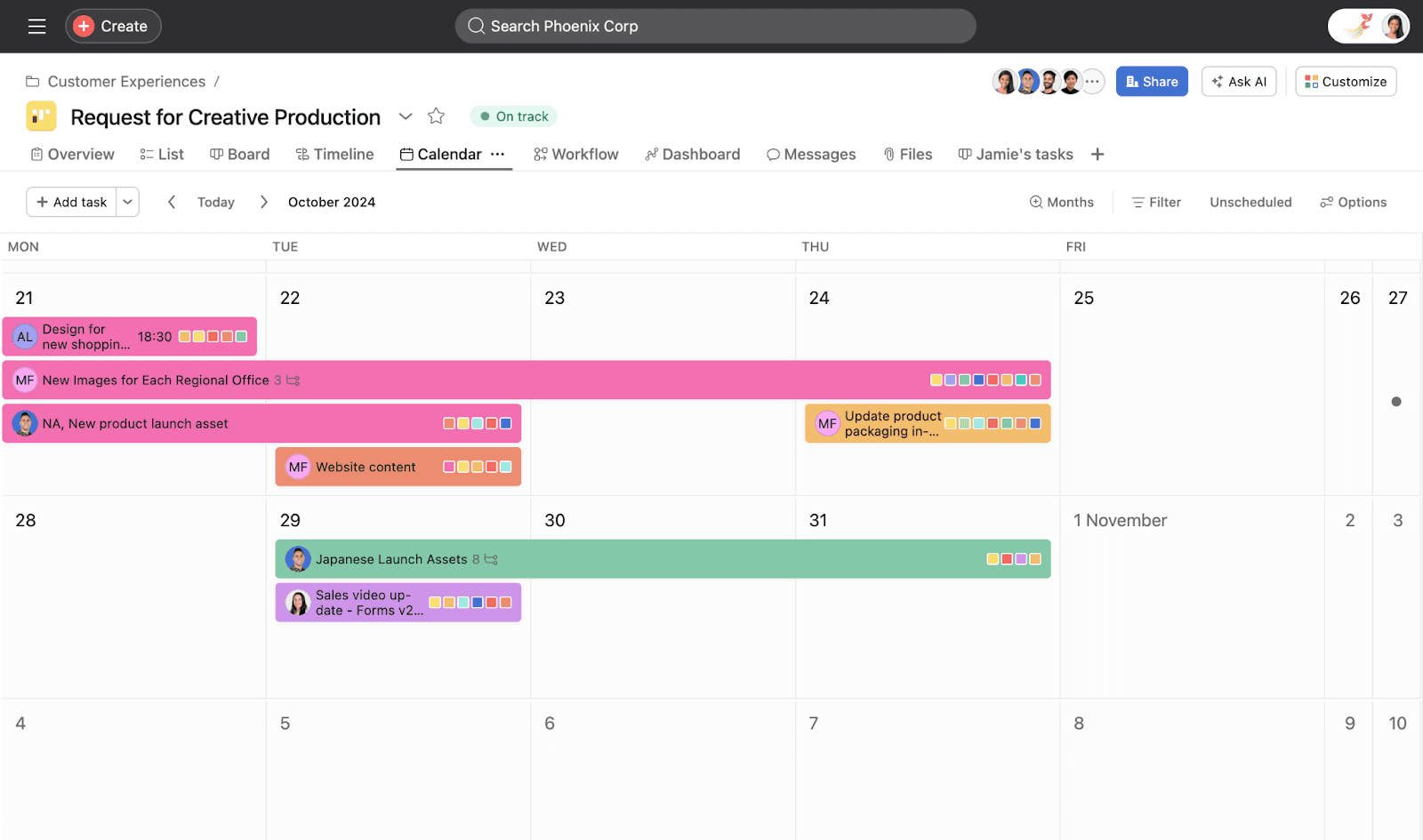
Asana
Source: Asana
Helps teams align on goals, responsibilities, and progress, making outcomes visible regardless of where work happens.
8. Brainstorming & Project Collaboration
Miro
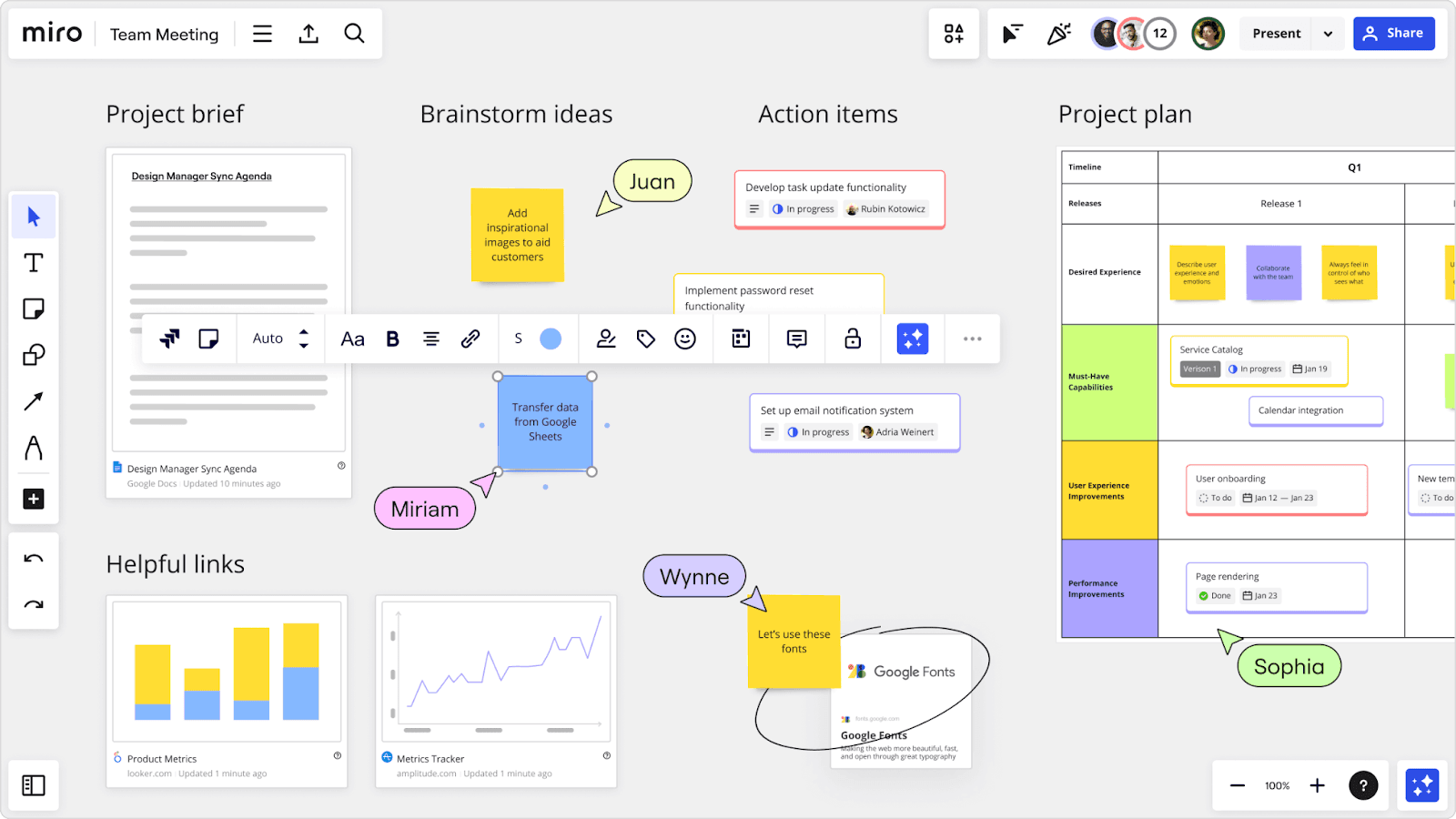
Source: Miro
Digital whiteboards for collaborative workshops and brainstorming, helping remote and in-office employees participate equally.
9. Documentation and knowledge sharing
Notion
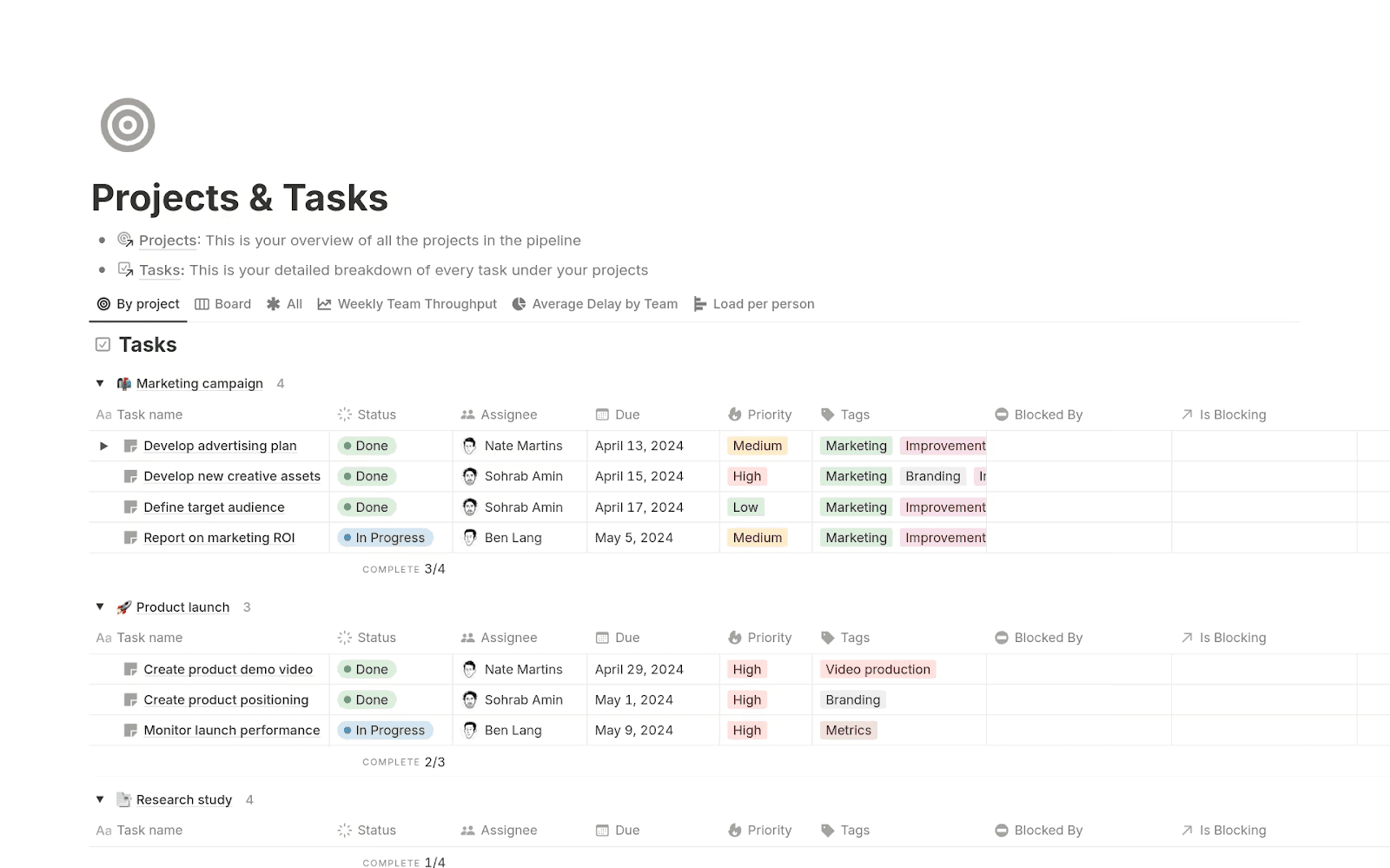
Source: Notion
Centralizes documentation, processes, and team knowledge to reduce meetings and repeated explanations.
10. Communication and collaboration
Microsoft Teams
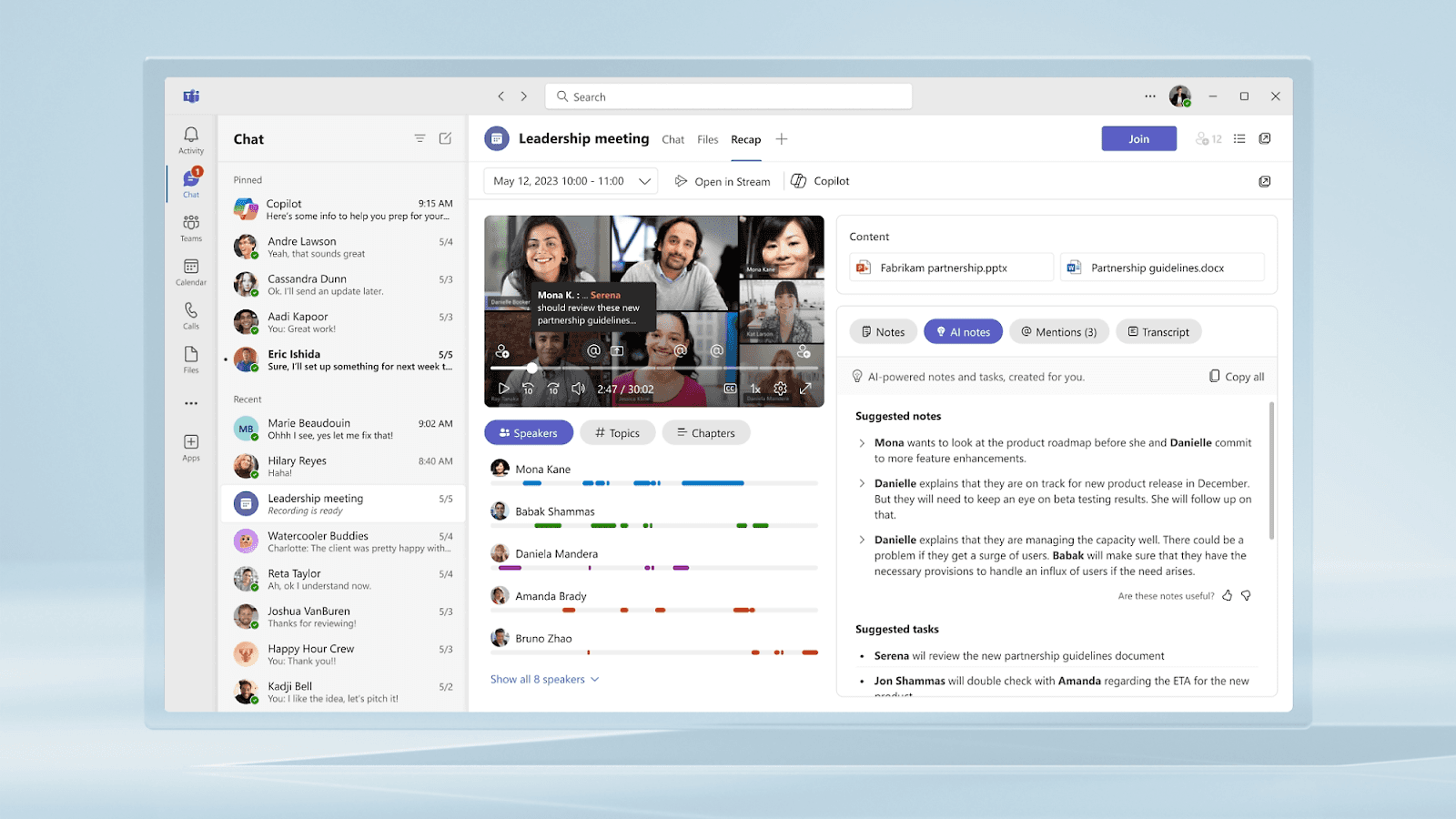
Source: Microsoft
Remains the backbone for communication in many EU organizations, especially when hybrid tools integrate directly into existing workflows.
Hybrid work
Take Action Today
Ready to take your teams’ productivity to the next level? Our free, ready-to-use Hybrid Productivity Toolkit helps you identify why productivity breaks down in hybrid setups, align teams without rigid rules, reduce cognitive load for employees, support decisions with data and turn hybrid strategy into clear, practical day-to-day ways of working.
![Blog article cover showing the title "Top Alternatives to Condeco [2026]" with a "Review" badge, alongside screenshots of the Condeco workspace booking software interface on a light purple background.](https://framerusercontent.com/images/7FAhxmIsQGasMzHAcf7pUS5XVz4.png?width=1200&height=630)